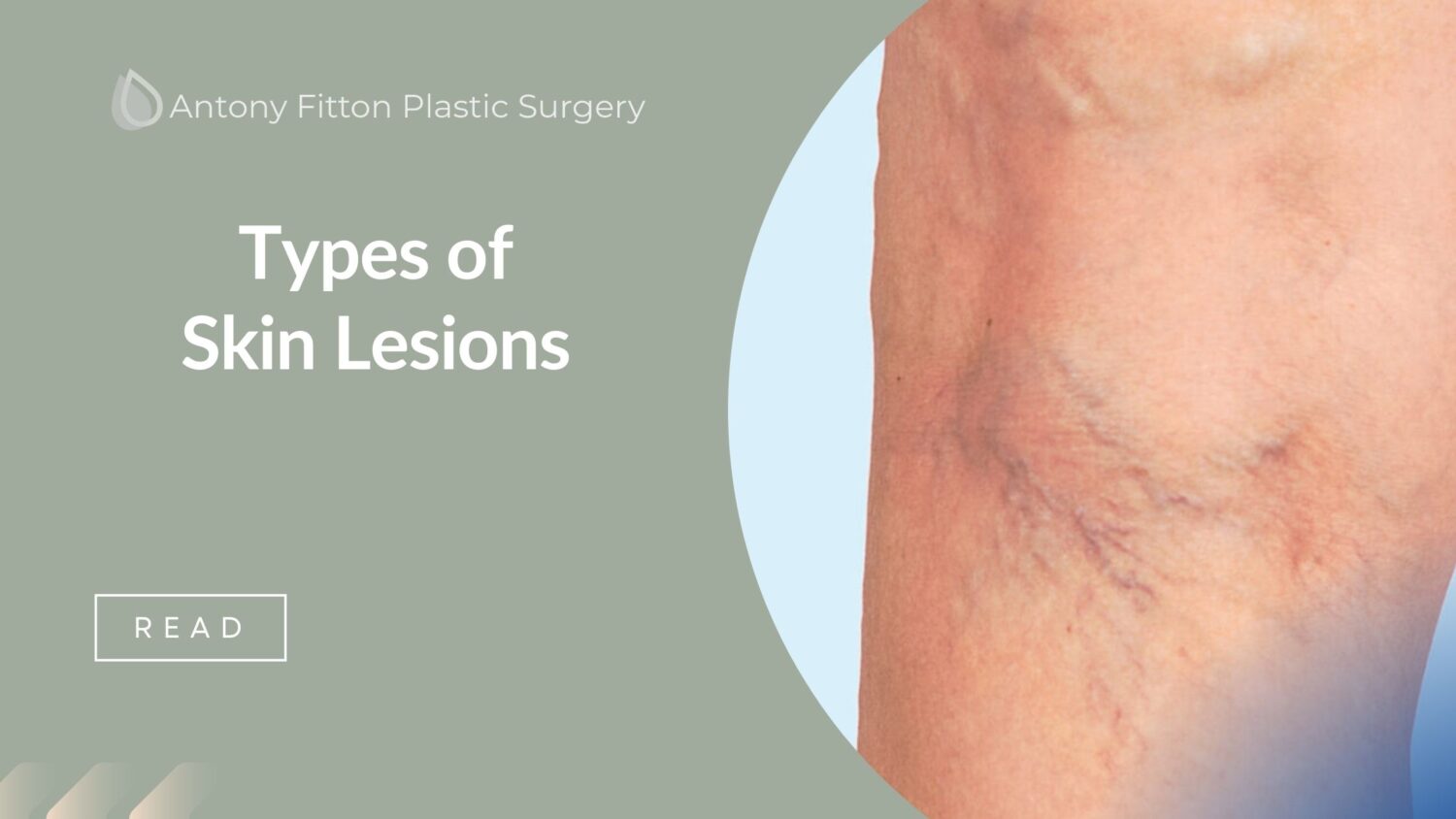
Types of Skin Lesions
The term “benign skin lesions” encompasses a wide range of lumps and blemishes from simple moles and warts to cysts, lipomas and pigmentary changes.
Treatment can involve surgical excision, curretage/tangential excision or laser ablation.
Historically treatment of benign skin lesions was available on the NHS in the UK. Recently the Primary Care Trusts have excluded such treatment.
Some skin lesions can bleed. Some are prone to recurrent infection. Some are situated in awkward places making them liable to being rubbed.
In these circumstances you may be eligible for treatment on the NHS. Your General Practitioner will be able to diagnose your skin condition and advise you where you can access treatment.
Some types of skin lesions include:
- Warts and plantar warts
- Seborrhoeic keratoses (benign skin growths, basal cell papillomas, warts)
- Spider naevi
- Thread veins
- Benign pigmented melanocytic naevi (moles)
- Dermatofibromas (skin growths)
- Skin tags
- ‘Sebaceous’ cysts (pilar and epidermoid cysts)
- Lipomata (fat deposits underneath the skin)
- Xanthelasmas (cholesterol deposits underneath the skin)
- Post acne scarring
- Port wine stains
Executing Surgery with Skill
Thank you so much
Do I Need Time Off Work After FTM Top Surgery?
If you’re planning FTM (female-to-male) or FTN (female-to-nonbinary) top surgery, one of the most
How Does a Nipple Graft Work?
One of the most frequently asked questions during consultations for FTM top surgery is: “How does
How Old Do I Need To Be For Plastic Surgery?
The minimum age for plastic surgery in the UK is 18. However, age alone doesn’t equal readiness. O